Summary
This article, based on a presentation, explores how social accessibility affects daily experiences. It highlights the importance of recognition, the barriers people face in public places, and the influence of disability history. The article also explains why empathy and inclusion fall short and offers clear steps for bringing awareness and dignity into design and human interactions.
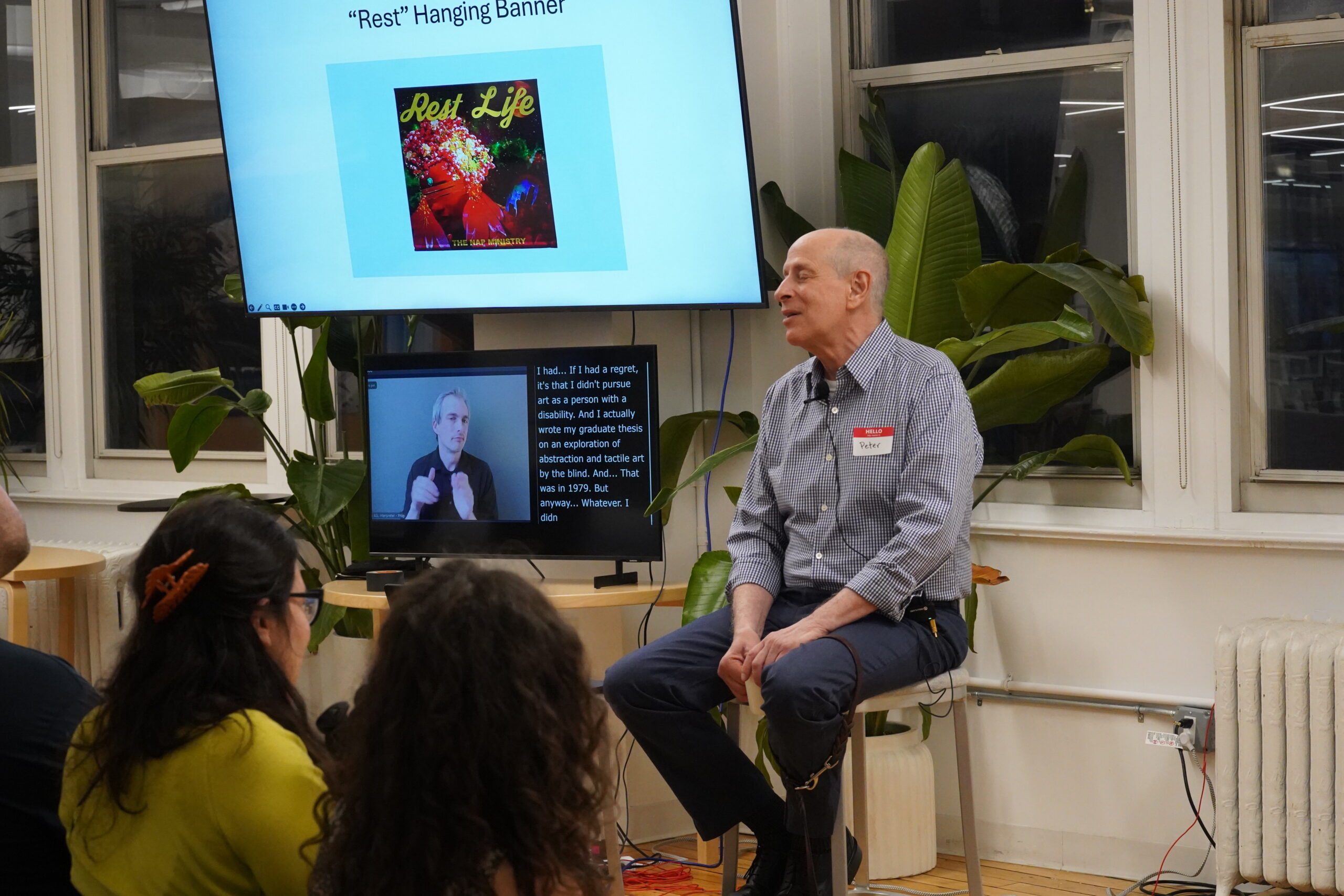
This article is based on a presentation at Accessibility New York City (A11yNYC) by Peter Slatin.
Social accessibility shapes how people move through the world. It affects whether people feel acknowledged, supported, or pushed aside in daily situations. Many barriers come from how individuals react to disability rather than from buildings or technology. These reactions influence access to public places, digital tools, and community life. Understanding social accessibility helps explain why physical and digital accessibility efforts often fall short.
Misunderstandings about disability often lead to hesitation or avoidance. People may feel unsure about how to interact and fall back on assumptions that create distance. These moments turn simple tasks into unnecessary challenges. When disabled people are not recognized as full participants in everyday life, exclusion grows. This pattern appears in workplaces, public spaces, and social settings.
Social accessibility strengthens dignity, autonomy, and safety. When people understand disability as a natural part of human experience, they respond with more respect and confidence. Without that understanding, even well-designed environments can become difficult to use.
Living with disability in everyday environments
Peter’s experiences with blindness show how often people misunderstand disability. He describes growing up with limited vision, losing more sight over time, and shifting from painting to journalism as his vision changed. These experiences reveal how disability shapes daily decisions and how people respond when they feel unsure. Some individuals offer unsolicited help. Others avoid interaction because they feel uncomfortable. These reactions create barriers unrelated to physical design.
Access problems often appear in routine situations. Entering a building with a guide dog can trigger conflict when staff members don’t know the law. As such, they deny access. These moments highlight the gap between legal requirements and real-world behavior. They also show how fear and misinformation can override policy and training.
Social barriers often cause more harm than physical ones. A revolving door can be navigated with support, but a person who locks the door to block entry creates a deeper barrier. A store may meet physical accessibility standards, but a staff member who refuses entry removes access entirely. These examples show how social accessibility determines whether physical and digital accessibility can succeed.
Understanding social accessibility
Social accessibility refers to the human side of access. It includes awareness, respect, and the ability to recognize disabled people as full participants in daily life. It reflects the behaviors and attitudes that support equitable interaction. When people understand disability, they respond more appropriately. When they don’t, they may create barriers without realizing it.
Recognition plays a central role. Recognition means seeing disabled people as individuals with value, agency, and expertise. It also means understanding disability as part of human diversity. Without recognition, people rely on stereotypes or assumptions. These assumptions can lead to exclusion, even in environments that meet accessibility standards.
Social accessibility supports physical and digital accessibility. Laws and guidelines can require ramps, captions, or navigation tools. They cannot require respect or understanding. People must choose to learn, listen, and adjust their behavior. When they do, access becomes easier and more consistent. When they don’t, barriers remain.
Why empathy and inclusion fall short
Empathy is often presented as a solution, but it can create detachment instead of understanding. Empathy exercises, such as blindfolds or simulations, offer only brief and distorted glimpses of disability. These activities highlight the most disorienting moments without the skills and adaptations disabled people develop over time. They create a false sense of understanding and prevent people from using their own insight to think more deeply about disability.
Inclusion can also fall short. Inclusion often implies being invited into a space controlled by others. This framing suggests that disabled people exist outside the space until someone decides to welcome them. It doesn’t acknowledge that disabled people already belong in every environment. Additionally, it ignores the power imbalance that shapes who sets the boundaries.
Recognition and equity offer a stronger foundation. Recognition acknowledges that disabled people belong without needing an invitation. Equity focuses on removing barriers and sharing power. These approaches support dignity and autonomy. They also encourage organizations to involve disabled people in decisions that affect them.
How history shapes attitudes about disability
Attitudes about disability come from long histories of exclusion and misunderstanding. Early societies often viewed disabled people as unable to contribute to basic survival tasks. These beliefs created patterns of exclusion that continue today. Some people still see disability as a burden or a problem to solve. Others view disabled individuals as inspirational figures who must overcome extraordinary challenges. Both views limit understanding and reduce people to narrow roles.
Historical movements have also shaped modern attitudes. Eugenics promoted the idea of improving society by excluding disabled people. This movement influenced policies, institutions, and cultural beliefs. Its effects continue to appear in assumptions about value, productivity, and worth. Understanding this history helps explain why social accessibility requires ongoing effort.
Disability communities have responded by creating their own spaces and solutions. During the HIV and AIDS crisis, disabled people and activists found common ground and worked together. Community groups, artists, and organizers continue to build networks that support access and dignity. These efforts show how collective action can challenge harmful narratives and create new possibilities.
Designing with accessibility in mind
Accessibility works best when built into the design from the beginning. When treated as an afterthought, it becomes more expensive and less effective. Good design considers legibility, operability, perceivability, and usability for everyone. These principles support physical and digital environments while reducing the need for retrofits and workarounds.
Design decisions shape how people interact with spaces. A ramp added after construction may meet legal requirements, but still feel like an afterthought. A well-integrated entrance supports dignity and independence. Digital design follows the same pattern.
Consulting disabled people is essential. Many design failures occur because disabled individuals were not involved in the process. The InvaCar illustrates this problem. It was created for disabled veterans, but did not meet their needs. It was unstable, isolating, and controlled by the state. A better design would have come from listening to the people who used it.
Rest, dignity, and everyday needs
Rest plays a crucial role in access. Benches, seating, and places to pause support participation in public life. Removing these features harms people who rely on rest to navigate the world. It also reflects assumptions about productivity and worth. Rest challenges the idea that people must always be moving or producing.
Rest can also serve as a form of resistance. Choosing to pause, sit, or nap pushes back against expectations that demand constant activity. This perspective supports dignity and autonomy. It also recognizes that people have different needs and rhythms. Designing for rest creates a more inclusive and humane environment.
Public spaces often overlook the importance of rest. Efforts to discourage loitering or control public behavior can remove essential supports. These decisions affect disabled people, older adults, and anyone who needs a moment to pause. Recognizing rest as a legitimate need helps create more welcoming communities.
What organizations and individuals can do next
Organizations can begin by training staff at every level. Effective training focuses on awareness, respect, and practical interaction skills. Staff members need to understand disability as part of everyday life. They also need guidance on how to support access without making assumptions. Including real examples and clear steps enhances the training.
Hiring disabled people is another essential action. Disabled employees bring lived experience and insight that simulations cannot replicate. Their presence helps organizations understand barriers and design better solutions. It also supports equity and representation.
Organizations can also review their policies and environments. This includes examining customer service practices, physical layouts, and digital tools. Small changes can remove significant barriers. Clear signage, accessible entrances, and consistent digital navigation support independence. Policies that respect autonomy and dignity create a more welcoming environment.
Moving forward
Social accessibility forms the foundation for meaningful access. Recognition, awareness, and respect shape how people experience the world. When these elements guide behavior, physical and digital accessibility efforts can succeed. When not present, barriers remain, even in well-designed environments. Building a culture of recognition supports dignity, autonomy, and full participation for everyone.
FAQ
Why does Peter emphasize recognition instead of empathy or inclusion?
Peter states that empathy often becomes a shortcut that lets people feel they “understand” disability without actually doing the work. Inclusion, in his view, implies being invited into a space someone else controls. Recognition, by contrast, acknowledges that disabled people already exist in every space and deserve to be seen, valued, and engaged as equals.
What does “social accessibility” mean?
Social accessibility refers to the human side of access: how people treat disabled people, whether they acknowledge them, and whether they understand disability as part of everyday life. Physical and digital accessibility cannot succeed without social accessibility because people who lack awareness or understanding often block access even when the environment is technically compliant.
Why did Peter shift from journalism to disability advocacy?
He describes two pivotal experiences: being physically blocked from entering a building with his guide dog and later being denied entry to a store because staff claimed he and his dog were a “liability.” These moments revealed how deeply social barriers undermine access, motivating him to focus on changing attitudes and awareness.
Does Peter regret not becoming an activist earlier in life?
He reflects that he might have pursued art differently had he understood his disability sooner, but he also notes that he lacked information and support as a child. He acknowledges mixed feelings but ultimately says he is glad to be doing this work now.
How should organizations increase awareness of non-apparent disabilities?
Peter recommends using the term non-apparent rather than invisible because it avoids implying shame. He stresses the need for more conversation, more learning, and bringing in people who actually live with non-apparent disabilities to speak for themselves. Recognition, not assumptions, is the foundation.
What does Peter think about the term “belonging”?
He prefers it over “inclusion” but notes that many such terms evolve without addressing the underlying issue: who defines the boundaries. He believes equity and recognition are more accurate goals.
Why does he highlight rest and benches as accessibility issues?
Peter supports the idea that rest — including sitting, pausing, or napping — is a form of resistance to productivity culture. Benches and places to rest are often removed to deter certain groups, but doing so harms disabled people who rely on rest as part of navigating public space.
What is “contagion response”?
Peter uses this phrase to describe the discomfort some nondisabled people feel around disability: a fear that disability is somehow “catchable.” This discomfort leads people to avoid interactions, which reinforces exclusion.
How can we encourage more meaningful interactions between disabled and nondisabled people?
He suggests normalizing disability as part of everyday life, increasing awareness, and ensuring people receive training at all levels. This includes everyone from leadership to frontline staff. Recognition, respect, and understanding reduce fear and hesitation.
Why does he criticize empathy simulations like blindfold exercises?
He explains that simulations provide only the most frightening or disorienting moments of disability, not the lived experience. They give nondisabled people a false sense of understanding while ignoring the skills, adaptations, and expertise disabled people develop over time.
How can designers move away from empathy-based approaches?
Peter encourages designers to stop relying on empathy exercises like blindfolds or simulations, which he calls “disability tourism.” Instead, he urges them to think critically, engage directly with disabled people, hire disabled designers, and learn from colleagues who may have disabilities but have not felt safe disclosing them.
What lessons does the InvaCar example illustrate?
The InvaCar — a state-issued “invalid car” — shows how well-intentioned design can fail when disabled people aren’t consulted. The vehicle was unstable, isolating, and paternalistic because users could not own it. It demonstrates why disabled people must be involved in design decisions.
Why does Peter say accessibility must be a driver of design?
Peter indicates that accessibility is often treated as an afterthought, which is something added after the “real” design is done. He insists that accessibility should shape design from the beginning, just like light, form, legibility, or operability. When it’s not built-in early, it becomes more expensive and less effective.
How does disability history connect to modern accessibility work?
He notes that disability history and accessibility share the same struggles: exclusion, misunderstanding, and the need for self-advocacy. Understanding this history helps explain why progress is slow and why disabled people often must create solutions themselves.
What does Peter mean by “do it yourself” when something isn’t accessible?
He encourages disabled people and allies to take action rather than wait for institutions to change. Many accessibility innovations — from mouthsticks to community-led mutual aid — emerged because disabled people created what they needed when no one else would.
Video highlights
- Introduction of social accessibility as the core idea and the link between recognition and access
- A revolving door incident showing how a lack of awareness creates real barriers
- Explanation of why empathy exercises like blindfolds create a false understanding
- Introduction of the InvaCar as an example of design without meaningful disability input
- FAQ with Peter
Watch the presentation
Resources
Bio
Peter Slatin is a writer, accessibility consultant, and disability advocate. Peter, who is blind, founded Slatin Group LLC in 2012 to provide education and training on disability equity and social accessibility to clients across a range of business and civic enterprises.
Peter is an adjunct professor at the New York Institute of Technology and an award-winning journalist and editor whose work has appeared in the New York Times, Wall Street Journal, and Forbes.
He received the 2007 Oculus Award for Excellence in Architectural Journalism from AIA NYC. He was a 2020-21 Encore Public Voices Fellow with the Op-Ed Project, and was named a 2021 Accessibility Champion by Visions/Services for the Blind.
Peter is Chair of the board of directors of Empire State Employment Resources for the Blind, a board director of the Colorado Center for the Blind, and a founding director of Camp Possibilities International, which supports blind children and youth in Kenya. Peter holds an M.F.A. from Hunter College CUNY and a B.F.A. from SUNY New Paltz.
